

Some mornings begin with an alarm you snooze three times, a coffee you drink standing up, and a phone already full of other people's demands. By evening, you're tired but wired, eating late, and wondering why your sleep and digestion feel so unpredictable.
Ayurveda has a simple answer to that kind of day: stop treating each habit as a separate problem, and give the whole day a rhythm. That rhythm is called dinacharya, and it's one of the oldest and most practical ideas in Ayurveda.
In this guide, you'll learn what dinacharya means, why timing matters, and how to build an Ayurvedic daily routine that works with a job, a family, and a phone that never stops buzzing. You don't need to wake up at 4 a.m. or move to a retreat. You just need a few small anchors.
What Is Dinacharya?
Dinacharya (pronounced din-ah-char-yah) is the Ayurvedic daily routine: a set of simple habits for waking, eating, moving, working, and resting that keep the body and mind in balance. The word comes from din, meaning day, and acharya, meaning to follow.
The idea is gentle. Ayurveda doesn't ask you to fight your nature. It asks you to follow the natural rhythm of the day, so your body knows what to expect and can do its job well.
Why a Daily Routine Matters in Ayurveda
Ayurveda sees health as balance. When your days are chaotic, with irregular meals, late nights, and constant stimulation, that balance slips. When your days have a steady pattern, digestion, energy, sleep, and mood tend to settle.
Modern science points in a similar direction. Your body runs on an internal clock, the circadian rhythm, which responds to light, meals, activity, and sleep times. Regular timing helps that clock work smoothly, and irregular timing can disrupt it. Dinacharya was describing this pattern long before it had a scientific name.
How the Doshas Shape the Day
Ayurveda describes three body-mind types called doshas: Vata (air and space), Pitta (fire and water), and Kapha (earth and water). Each of us has a unique mix, and each stage of the day is said to carry a different quality:
- ◆6 a.m. to 10 a.m. (Kapha time): heavier, slower, steady
- ◆10 a.m. to 2 p.m. (Pitta time): sharp, focused, strong digestion
- ◆2 p.m. to 6 p.m. (Vata time): light, creative, restless
- ◆6 p.m. to 10 p.m. (Kapha again): calm and winding down
- ◆10 p.m. to 2 a.m. (Pitta again): the body repairs and processes
- ◆2 a.m. to 6 a.m. (Vata again): light sleep and early waking
You don't need to memorize these. They simply explain why Ayurveda suggests a heavier lunch, an earlier bedtime, and a calm start to the morning.
The Benefits of an Ayurvedic Daily Routine
People who follow a steady routine often report the same kinds of changes. These are general observations from Ayurvedic practice and everyday experience, not guaranteed results:
- ◆More regular digestion and appetite
- ◆Steadier energy through the afternoon
- ◆Easier sleep and more refreshed waking
- ◆A calmer, less reactive mind
- ◆A stronger sense of discipline and self-care
The benefit is cumulative. No single habit does the work. The pattern does.
Morning Dinacharya: Start the Day With Intention
Morning is the most important part of the routine because it sets the tone for everything after it. Here's what a practical morning looks like.
Wake Up Early, Gently
Ayurveda traditionally recommends waking before sunrise, around 5:30 to 6 a.m. If you're far from that now, don't leap. Move your wake time earlier by 15 minutes each week until it feels natural. Going to bed earlier is what makes this possible.
Clean the Senses and the Mouth
Ayurveda treats the morning as a time to clear what built up overnight. The classic steps are simple:
- ◆Scrape your tongue with a copper or steel scraper. It takes about thirty seconds.
- ◆Brush your teeth as usual.
- ◆Rinse with water, or try oil pulling (swishing a spoonful of sesame or coconut oil for a few minutes) if you enjoy it.
- ◆Splash cool water on your face and eyes.
Drink Warm Water
A glass of warm or room-temperature water on waking is a common Ayurvedic habit. Many people find it gently wakes up digestion and supports a regular morning bowel movement. Skip it if it doesn't suit you.
Move Your Body
Gentle exercise in the morning, such as a walk, stretching, or yoga, helps shake off sluggishness. Ayurveda suggests exercising to about half your capacity, until you feel light and warm rather than drained.
Breathe and Sit Quietly
Even five minutes of breathing practice and stillness changes how the day feels. Slow, steady pranayama is a good place to start, and it works best when matched to your needs. Our doctors explain why your pranayama practice may not be working and how to fix it.
Try Self-Massage When You Have Time
Abhyanga, a warm oil self-massage, is a cornerstone of Ayurvedic self-care. Ten minutes before a shower, using sesame oil or an oil suited to your constitution, is plenty. On rushed mornings, just massage your feet and scalp.
Eat a Light, Warm Breakfast
A simple cooked breakfast, such as porridge, upma, or stewed fruit, is easier on the digestion than something cold or heavy. If you're not hungry, a warm drink is enough to begin with.
Midday and Afternoon Dinacharya: Keep Your Energy Steady
Make Lunch Your Main Meal
According to Ayurveda, digestive fire is strongest around midday. That's why a larger, freshly cooked lunch is recommended, with a lighter dinner. Sit down to eat, avoid screens, and chew well. This one change helps many people with bloating and afternoon crashes.
Take a Short Walk After Eating
A ten-minute stroll after lunch supports digestion and clears the mind before the afternoon. It's also a gentle reset if you've been sitting for hours.
Work in Focused Blocks
The afternoon often brings restlessness. Break your work into focused chunks with short pauses to stretch or breathe. A few slow breaths at your desk count as practice.
Don't Skip Water and Real Breaks
Sip warm or room-temperature water through the day rather than gulping large amounts at once. Step away from your screen for a few minutes every hour or so.
Evening Dinacharya: Wind Down for Better Sleep
Eat an Early, Light Dinner
Aim to finish dinner two to three hours before bed, ideally by 7:30 or 8 p.m. A warm, simple meal such as soup, khichdi, or cooked vegetables with rice is easier to digest than a heavy late dinner.
Dim the Lights and Switch Off Screens
Bright light and constant notifications keep the nervous system on alert. An hour before bed, lower the lights, put your phone away, and do something calm, like reading, journaling, or light stretching.
Massage Your Feet Before Sleep
A few minutes of warm oil on the soles of your feet is a traditional Ayurvedic way to settle the body. Wear old socks afterward so your sheets stay clean.
Be in Bed by 10 p.m.
Ayurveda treats the hours before 10 p.m. as the easiest time to fall into deep sleep. Going to bed before the second wave of Pitta energy arrives can leave you rested instead of wired. Even moving your bedtime 30 minutes earlier helps.
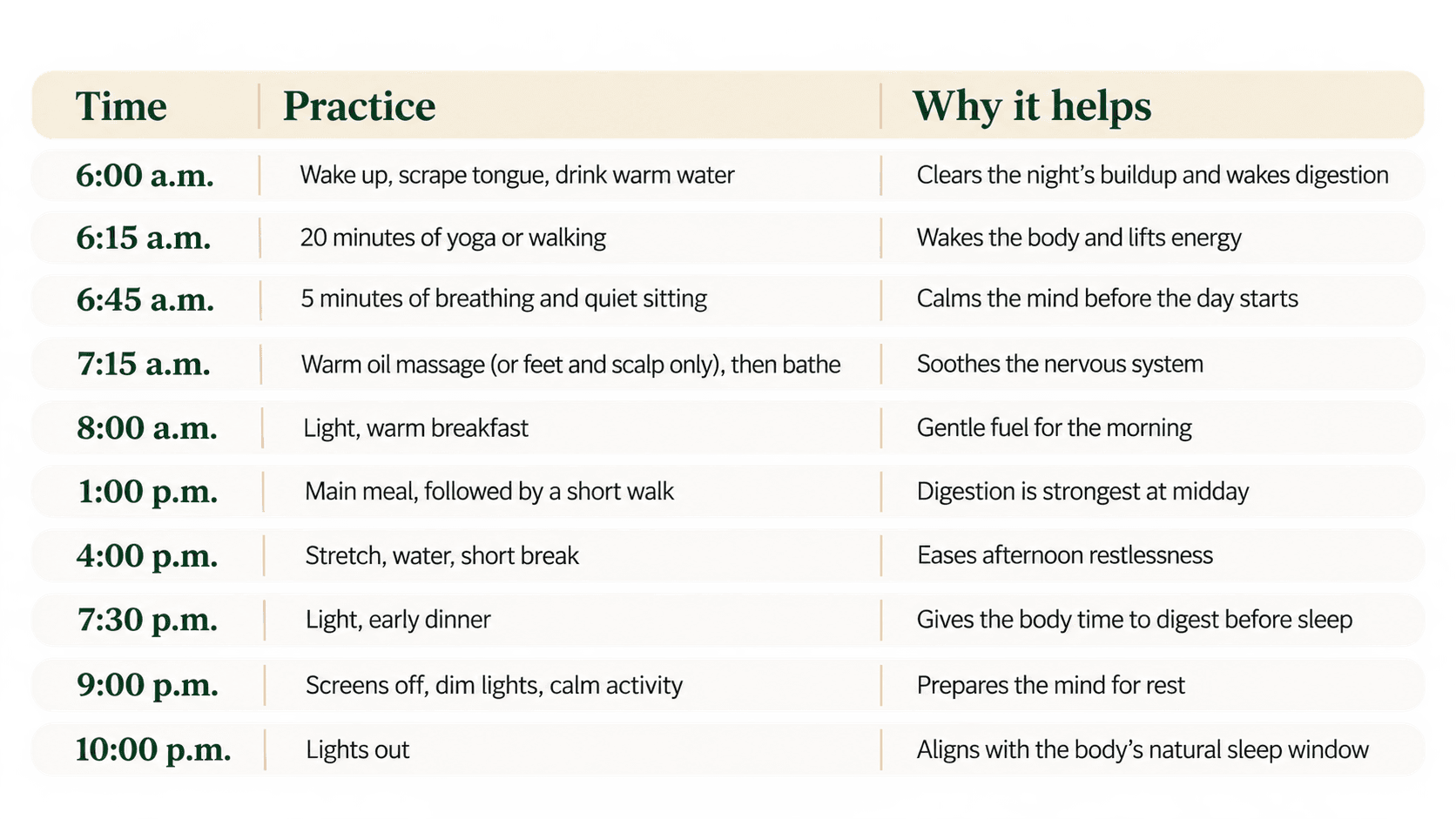
A Sample Ayurvedic Daily Routine for Busy People
Here is a realistic schedule you can adjust to your own life. Treat the times as guides, not rules.
How to Start Without Getting Overwhelmed
The biggest mistake with dinacharya is trying to do everything on day one. That turns a calming practice into one more thing to fail at. Instead:
- Pick two or three habits. Tongue scraping, warm water, and an earlier bedtime make a gentle start.
- Anchor them to something you already do. Scrape your tongue right after brushing, for example.
- Stay with them for two weeks before adding anything new.
- Notice how you feel, not just whether you ticked the box.
- Be flexible. A missed morning isn't a failure. Pick up again at the next meal.
Adjust the Routine to Your Constitution
The broad outline works for most people, but the details change with your dosha. Someone with a lot of Vata may need more warmth, more oil, and a stricter bedtime. A Pitta-dominant person may need cooling foods and a break from intense workouts. A Kapha-dominant person often does better with more vigorous morning movement. A qualified Ayurvedic doctor can work out your constitution and tailor the routine.
Common Mistakes to Avoid
- ◆Copying a stranger's routine without checking if it suits you
- ◆Waking very early while still going to bed late
- ◆Overdoing exercise in the name of discipline
- ◆Treating dinacharya as rigid rules instead of a rhythm
- ◆Skipping meals, then eating a large dinner late at night
Frequently Asked Questions About Dinacharya
What is dinacharya in Ayurveda?
Dinacharya is the Ayurvedic daily routine. It's a set of habits for waking, eating, moving, working, and sleeping that follow the natural rhythm of the day, so the body and mind stay in balance.
What time should I wake up for dinacharya?
Traditionally, Ayurveda recommends waking before sunrise, around 5:30 to 6 a.m. If that's far from your current schedule, move your wake time earlier by 15 minutes at a time. A consistent wake time matters more than an extreme one.
Can I follow dinacharya with a busy job or family?
Yes. A few small anchors work better than an elaborate routine you can't keep up. Start with tongue scraping, warm water, a proper lunch, and an earlier bedtime, then build slowly.
How long does it take to see results from an Ayurvedic daily routine?
Some people feel calmer or sleep better within one to two weeks. Changes in digestion and energy usually become clearer after a month or more of steady practice. Results vary from person to person.
Is dinacharya the same for everyone?
The principles are shared, but the details differ by dosha, age, season, and health. That's why Ayurvedic doctors personalize the routine instead of handing everyone the same schedule.
Conclusion: Let the Day Give You Rhythm
Dinacharya isn't about perfection or waking at a punishing hour. It's about giving your days a pattern your body can rely on. When meals, movement, rest, and quiet moments show up at roughly the same time each day, many people notice they feel steadier, think more clearly, and sleep better.
Start small. Choose two habits from this guide, keep them for two weeks, and watch what shifts. Then add one more.
Make Dinacharya Part of Your Daily Life
Discover how a daily Ayurvedic routine can fit your constitution and lifestyle. At Kanasu Wellness in Udupi, our team helps you explore personalised self-care practices through our wellness programmes. Start a conversation with us to find the right approach for you.
Explore Our Programs